What Are Refractive Errors?
Many people experience blurry vision at some point. Often, this is due to refractive errors. These are common vision problems that affect how light enters your eye. As a result, you may not see clearly. The main types of refractive errors include myopia, hyperopia, astigmatism, and presbyopia. Each type affects vision in a different way. However, all can be managed with the right care.
Main Types of Refractive Errors
Myopia (Nearsightedness)
Myopia means you can see close objects clearly, but distant objects look blurry. In this condition, light focuses in front of the retina. Because of this, far-away things are hard to see. Myopia is very common, especially in children and young adults.
Hyperopia (Farsightedness)
With hyperopia, you see distant objects better than close ones. Here, light focuses behind the retina. As a result, reading or doing close work can be difficult. This type of refractive error can affect people of all ages.
Astigmatism
Astigmatism happens when the cornea or lens has an uneven shape. Therefore, light does not focus evenly on the retina. This causes blurry or distorted vision at all distances. Astigmatism often occurs with myopia or hyperopia.
Presbyopia
Presbyopia is an age-related vision problem. It usually starts after age 40. In this case, the eye loses its ability to focus on close objects. Reading small print becomes harder. Unlike other types, presbyopia is a normal part of aging.
Symptoms of Refractive Errors
Refractive errors can cause several symptoms. However, some people may not notice any problems at first. Common signs include:
If you notice these symptoms, it is important to get your eyes checked.
Causes and Risk Factors
Several factors can lead to refractive errors. Some are beyond your control. For example, genetics play a big role. If your parents have vision problems, you may too. Other risk factors include:
Although you cannot change your genes, you can protect your eyes in other ways.
Diagnosis and Eye Exams
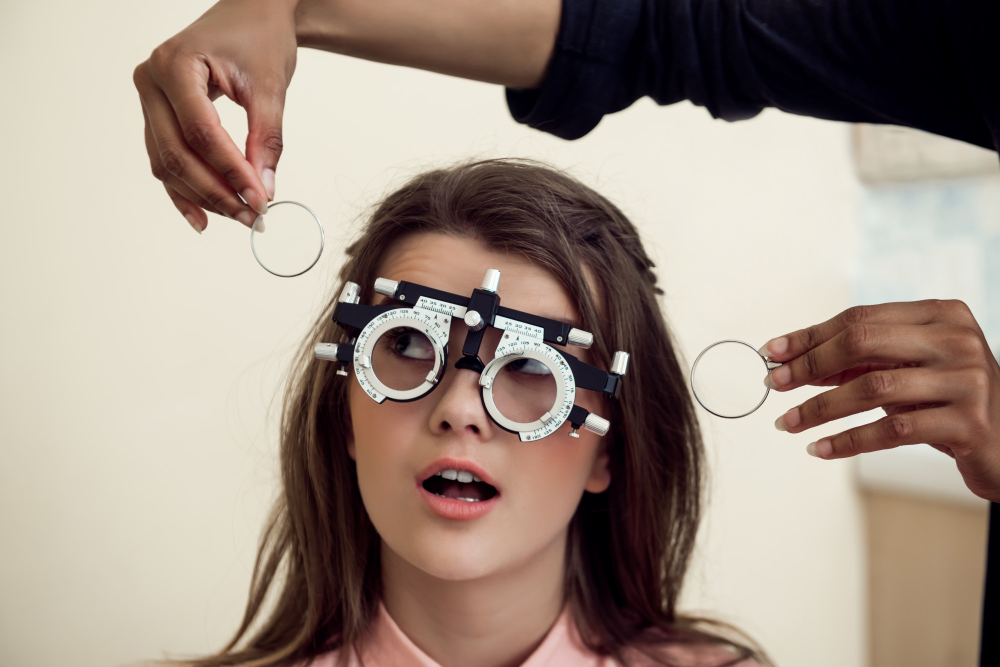
Regular eye exams are the best way to detect refractive errors. During an exam, an eye care specialist will:
Early diagnosis helps prevent further vision problems. Therefore, schedule an eye exam every one to two years, or as recommended.
Treatment Options
There are several ways to correct refractive errors. Your eye care specialist will suggest the best option for you. Common treatments include:
Each option has pros and cons. However, all can help you see better and live more comfortably.
Prevention and Eye Health Tips
While you cannot always prevent refractive errors, you can keep your eyes healthy. Try these tips:
By following these steps, you can support your vision and overall eye health.
Conclusion
In summary, refractive errors are common vision problems that can affect anyone. However, with early detection and proper treatment, you can enjoy clear vision. Consult an eye care specialist at Srijan Eye & Mother Care for personalized advice and regular eye check-ups.